By Travel Breed | Updated May 2026 | 12 Min Read
The best time to visit Manali is one of the most searched travel questions in India — and for good reason. Manali is not a destination that looks or feels the same across twelve months.
This guide gives you a complete, honest, month-by-month breakdown of Manali across all twelve months — with temperature ranges, what is open, what is not, what to do, and who each window suits best. By the end, you will know exactly when your personal best time to visit Manali is.
If you are already ready to plan and just want a curated Manali Package matched to your dates, WhatsApp MANALI to +91 9971355877, and the Travel Breed team will get back to you within the hour.
Understanding Manali’s Four Seasons Before Picking Your Dates
Before getting into the month-by-month detail, it helps to understand how Manali’s year broadly divides. There are essentially four distinct phases, each with a completely different character.
Winter (November to February) brings heavy snowfall, sub-zero temperatures in higher areas, Solang Valley buried in snow, and Rohtang Pass closed to traffic. This is the season for snow lovers, honeymooners who want a white Manali, and travellers who want to ski or play in fresh powder. Roads require snow chains. The town of Manali itself stays accessible.
Spring and Early Summer (March to June) is the single most popular window to visit Manali. Snow is still visible at higher elevations, the weather is pleasantly cool, Rohtang Pass opens around May, and the Beas River is at its most energetic. This is peak tourist season — prices are higher, crowds are significant, and booking is essential.
Monsoon (July to September) brings heavy rainfall, landslide risk on mountain roads, and lush green landscapes that most tourists never see. Rohtang Pass closes during heavy rain. Adventure activities are limited. But for budget travellers and those who love the mountains in their rawest, most dramatic form, this season has a unique appeal.
Autumn (October to November) is arguably the most underrated window to visit Manali. The rains have cleared, the skies are crystal blue, the crowds have thinned, rates are lower, and the landscape transitions from green to golden. October, particularly, is one of the finest months in Manali for photography and exploration.
Now, let us go month by month.
Month-by-Month: The Best Time to Visit Manali for Every Type of Traveller
January — Peak Winter, Deep Snow
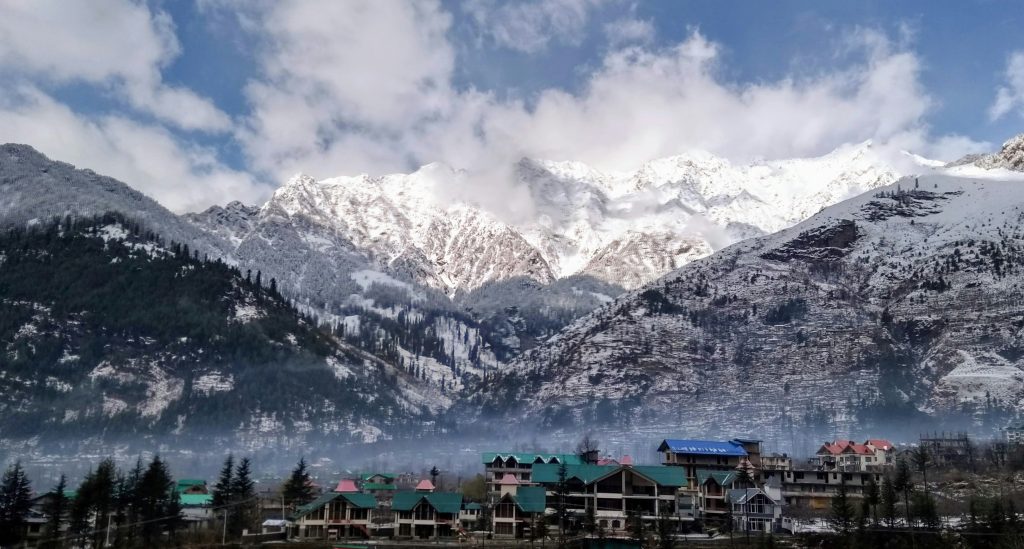
Temperature: -4°C to 10°C (town) | Sub-zero at higher elevations Crowd Level: Moderate (primarily snow chasers and honeymooners) Road Status: Rohtang Pass closed | Atal Tunnel operational | Solang Valley accessible
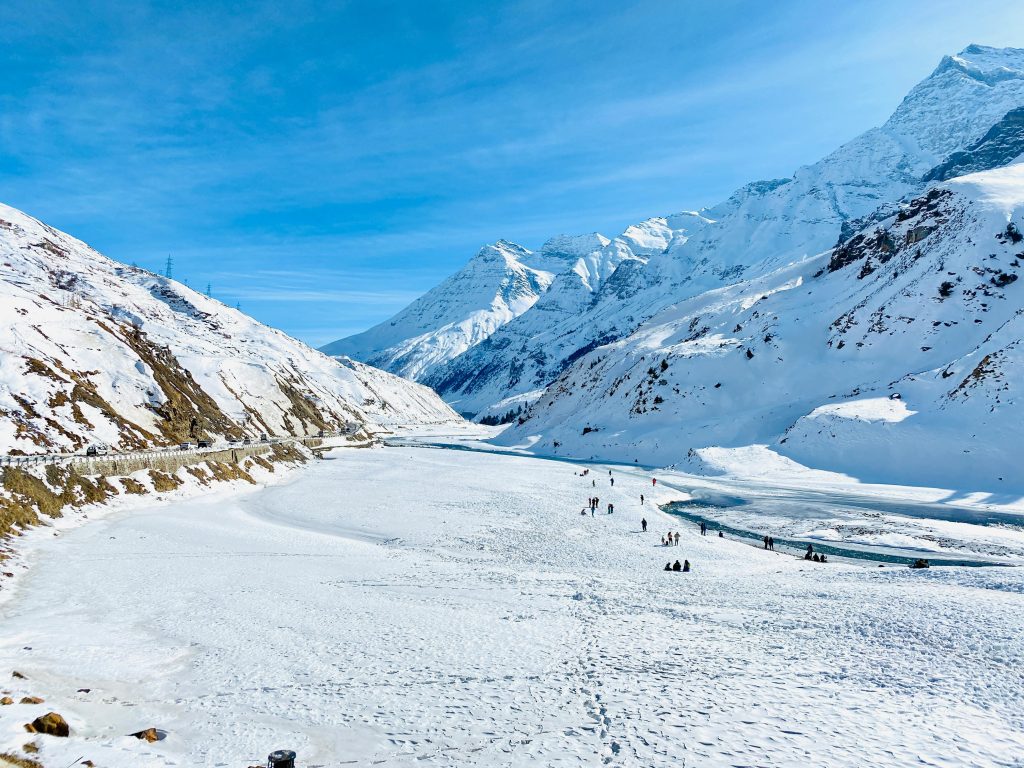
January is Manali at its most intensely wintery. Snowfall is frequent and heavy, Solang Valley is blanketed in deep snow, and the entire landscape takes on the kind of stillness that only happens when everything is buried under white. This is not a month for casual tourists — it rewards travellers who specifically want the snow experience and are prepared for it.
Solang Valley is the centre of January activity — skiing, snowboarding, snow zorbing, sledging, and snowshoeing are all available here. The Atal Tunnel (Rohtang Tunnel) allows access through to Sissu and Lahaul valley even in winter, which gives you a spectacular frozen landscape drive without the road conditions of the old Rohtang route.
The town of Manali remains accessible and functional — hotels, restaurants, and local markets operate normally. Hadimba Temple, Old Manali, and Mall Road are all accessible. The hot springs at Vashisht are particularly appealing in the cold.
Best for: Honeymooners wanting a snow-covered romantic Manali. Snow sports enthusiasts — skiing and snowboarding at Solang Valley are at their best. Photographers chasing snowfall and mountain winter landscapes.
Pack: Heavy thermal innerwear, wool sweaters, a down jacket, waterproof snow boots, gloves, woollen caps, and moisture-lock skincare. Do not underestimate the cold — it is severe.
February — Snow Stays, Slightly Warmer
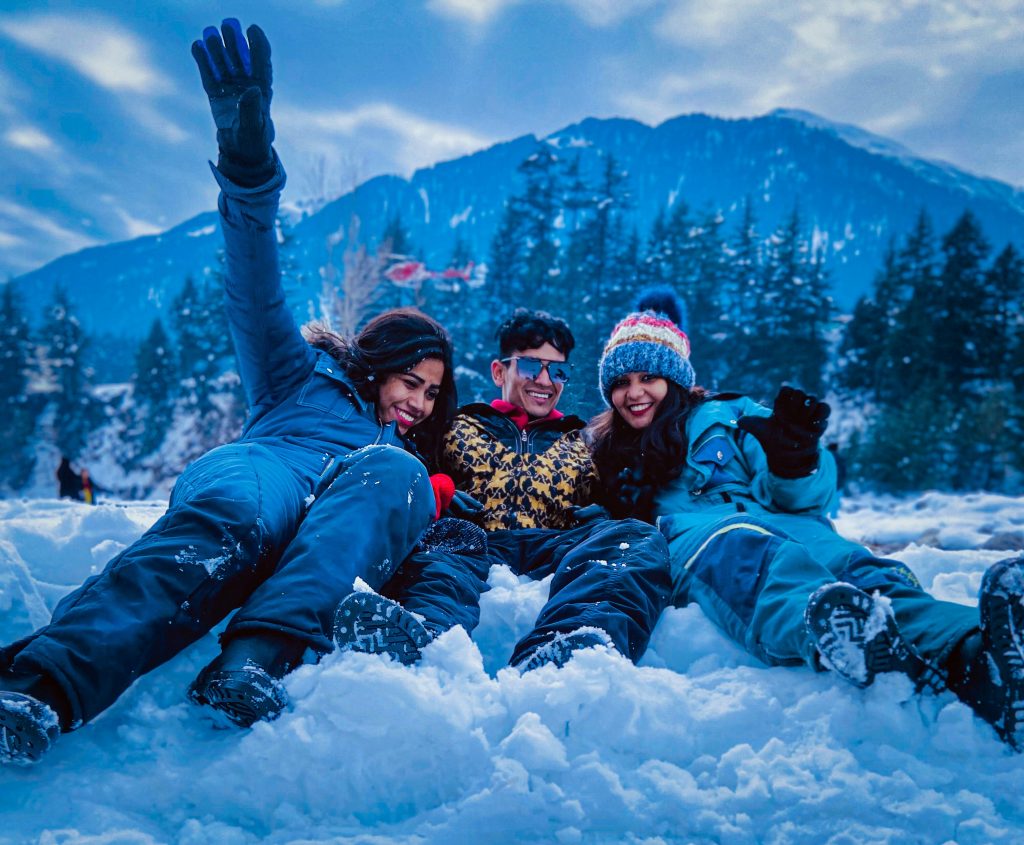
Temperature: -2°C to 12°C Crowd Level: Low to moderate Road Status: Rohtang Pass closed | Atal Tunnel open | Solang Valley accessible
February carries virtually all of January’s snow appeal with marginally warmer daytime temperatures and slightly lower crowd levels than the Christmas–New Year peak of December–January. Snow is still heavy, Solang Valley is still fully white, and the skiing and snow sports options remain excellent.
February is a particularly good month for budget travellers who want the snow experience — hotel rates come down from the January peak while the actual snow conditions remain excellent or even improve. The Beas River at this time of year is a gorgeous sight — partially frozen in some sections, with snow-covered banks making it one of the most scenic river views in North India.
The Mahashivratri festival typically falls in February or March and is celebrated at Hadimba Temple and throughout the Kullu–Manali valley with significant local fervour — a cultural experience worth timing your trip around if the dates align.
Best for: Budget-conscious travellers wanting full snow experience. Couples on a romantic Manali trip without peak-season January pricing. Winter sports enthusiasts who want Solang Valley to themselves.
March — Transition Month, Snow Meets Spring
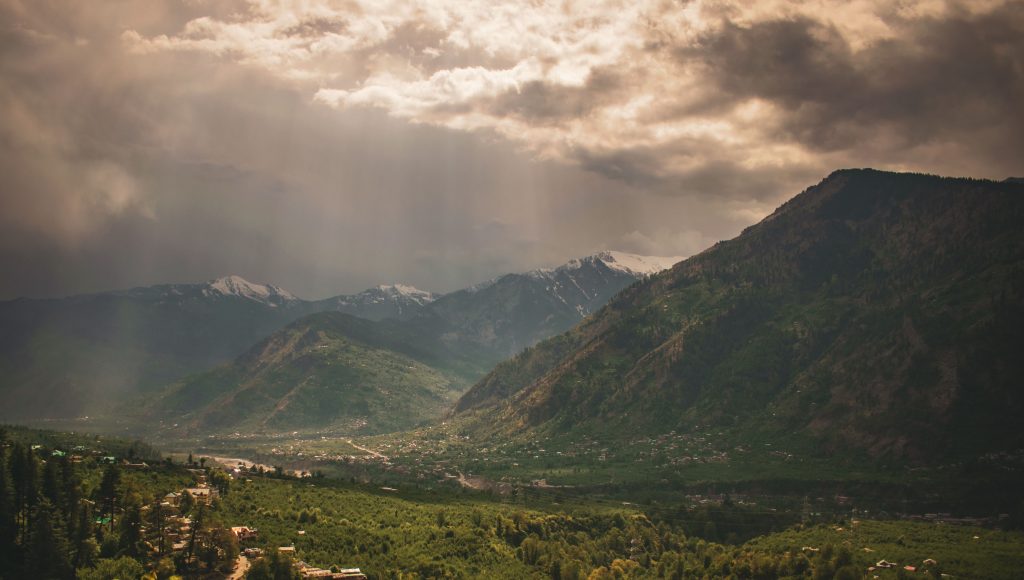
Temperature: 2°C to 15°C Crowd Level: Low — picking up toward the end of the month Road Status: Rohtang Pass still closed (opens May) | Atal Tunnel open | Solang Valley accessible
March is one of the most interesting months to visit Manali because it sits at the crossroads of two seasons. Snow still covers the higher elevations — Solang Valley and Rohtang Pass remain white — but the lower valleys begin to wake up. The first green appears, the Beas flows stronger as snowmelt begins, and the days become genuinely pleasant.
Snow activities at Solang Valley remain available through much of March. Trekking trails in the lower Kullu Valley begin to open up. This is one of the quietest months to visit Manali — tourist infrastructure is largely running but without the peak-season crowds, which means better rates, more attentive service, and a more personal experience of the place.
Apple orchards in the Kullu valley begin to blossom toward the end of March, creating one of the most beautiful and underrated visual experiences in the entire region.
Best for: Travellers who want both snow and early spring greenery in the same trip. Those who want Manali without the crowds or peak-season pricing.
April — Pleasant Weather, Adventure Season Opens
Temperature: 5°C to 20°C Crowd Level: Moderate — building toward peak Road Status: Rohtang Pass still closed (typically opens May) | Most other roads open
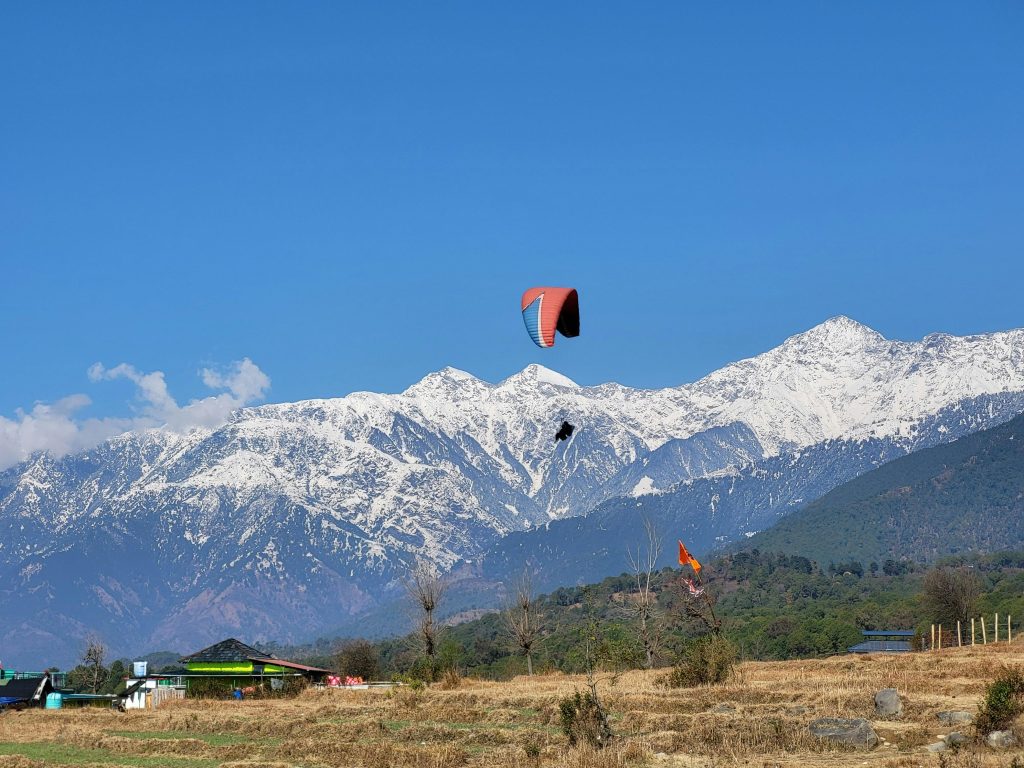
April is when Manali shifts firmly into its summer adventure identity. The weather is comfortably cool — warm enough for outdoor activities during the day, cool enough to sleep well at night. The Beas River is powerful and fast with snowmelt, making this one of the best months for white-water rafting. Paragliding at Solang Valley and Kullu opens up as conditions become suitable.
Snow is still visible on the higher peaks even in April, giving the valley that classic Manali look — green valley floor, snow-capped ridges above, clear blue skies. Bhrigu Lake trek, Hamta Pass trek, and other high-altitude trails start to become accessible toward the end of the month.
April also sees the famous Kullu Valley Shivratri fair, one of the largest religious gatherings in Himachal Pradesh — if you want to experience authentic local culture alongside the mountain scenery, this is a significant travel event.
Best for: Adventure seekers — rafting, paragliding, trekking. Families with children who want pleasant weather and a full range of activities. First-time Manali visitors who want the postcard experience without peak-season chaos.
May — The Single Most Popular Month to Visit Manali
Temperature: 10°C to 25°C Crowd Level: Very High — peak season in full swing Road Status: Rohtang Pass opens (usually mid-May) | All major roads accessible
If there is one month that defines peak Manali tourism, it is May. Rohtang Pass typically opens in mid-May after winter closure, which is a significant event — the road to Lahaul–Spiti opens, Keylong and Koksar become accessible, and the full circuit of Manali’s mountain attractions becomes available. The weather is at its most universally pleasant — warm sunny days, cool evenings, almost no rain.
This is the month when Manali receives its highest tourist volumes. Hotels book out weeks in advance. Rohtang Pass sees daily traffic jams. Solang Valley is crowded with day trippers. The town itself is buzzing with energy. If you want Manali at its most alive and accessible, May delivers. If you want Manali without crowds, May is not your month.
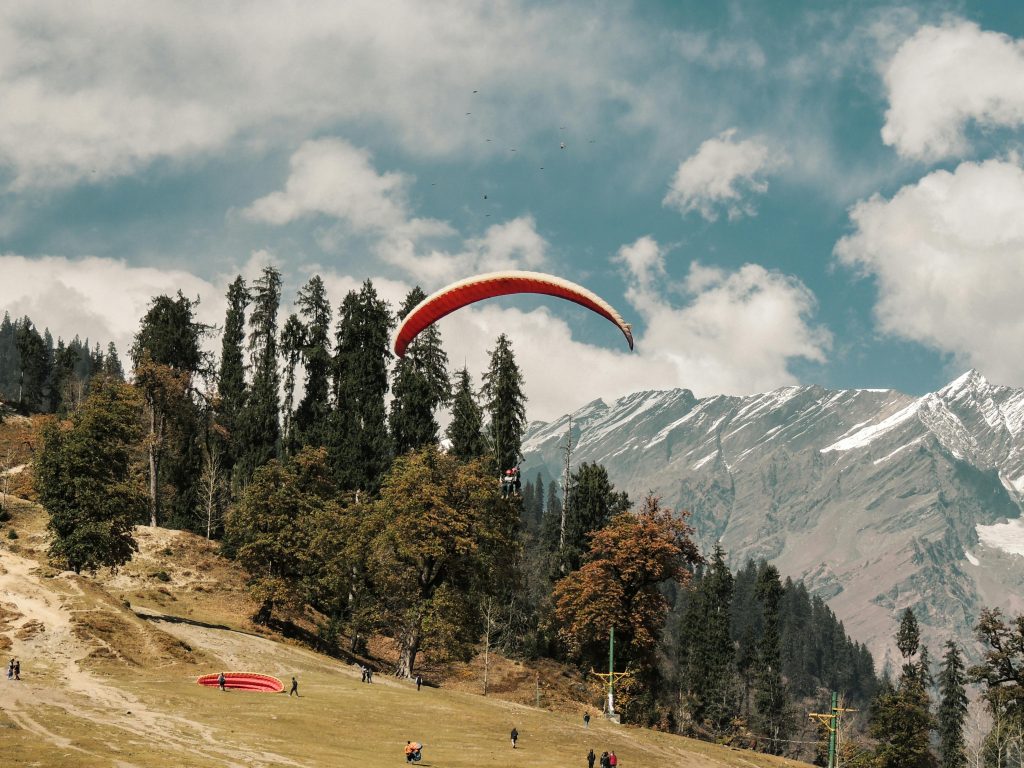
The full range of activities is available: rafting on the Beas, paragliding at Solang Valley and Kullu, trekking on Bhrigu Lake and Hamta Pass trails, Atal Tunnel drives, zorbing, and day trips to Rohtang for snow even in summer.
Best for: Families with school-age children (summer holidays begin). First-time visitors who want every attraction accessible and every activity running. Travellers who want the energy and full infrastructure of peak-season Manali.
Book at least 4–6 weeks in advance for May travel — hotels and packages sell out.
June — Summer Peak Continues, Rohtang Fully Open
Temperature: 13°C to 28°C Crowd Level: Very High — school holidays peak Road Status: Rohtang Pass fully open | Manali–Leh Highway opens (late June) | All roads accessible
June continues the peak summer season and adds one significant new dimension — the Manali–Leh Highway, one of the world’s most celebrated high-altitude road journeys, typically opens in late June. This makes June the starting point for one of the most iconic road trips in India. Travellers who want to drive from Manali to Leh via Sarchu, Baralacha La, and the high passes of Ladakh begin their journeys from here in June.
The weather remains excellent — clear, cool, and consistently good for outdoor activity. Everything available in May remains available in June. School summer holidays mean the highest family tourist volumes of the year. Booking is essential.
Toward the end of June, the pre-monsoon begins to build. Occasional rain showers start appearing, especially in the evenings, but full monsoon conditions have not set in yet.
Best for: Leh–Manali road trip travellers starting their Ladakh journey. Families on summer holidays. Adventure travellers wanting the full range of Manali activities at peak infrastructure.
July — Monsoon Arrives, Landscape Transforms
Temperature: 13°C to 22°C Crowd Level: Low — tourist numbers drop Road Status sharply: Rohtang Pass frequently closed due to rain | Landslide risk on mountain roads | Atal Tunnel operational
July is when Manali’s tourist calendar quiets down sharply. The monsoon arrives with heavy rainfall, Rohtang Pass closes frequently due to rain and landslide risk, and most adventure activities are suspended or heavily restricted. Roads to higher elevations become unpredictable.
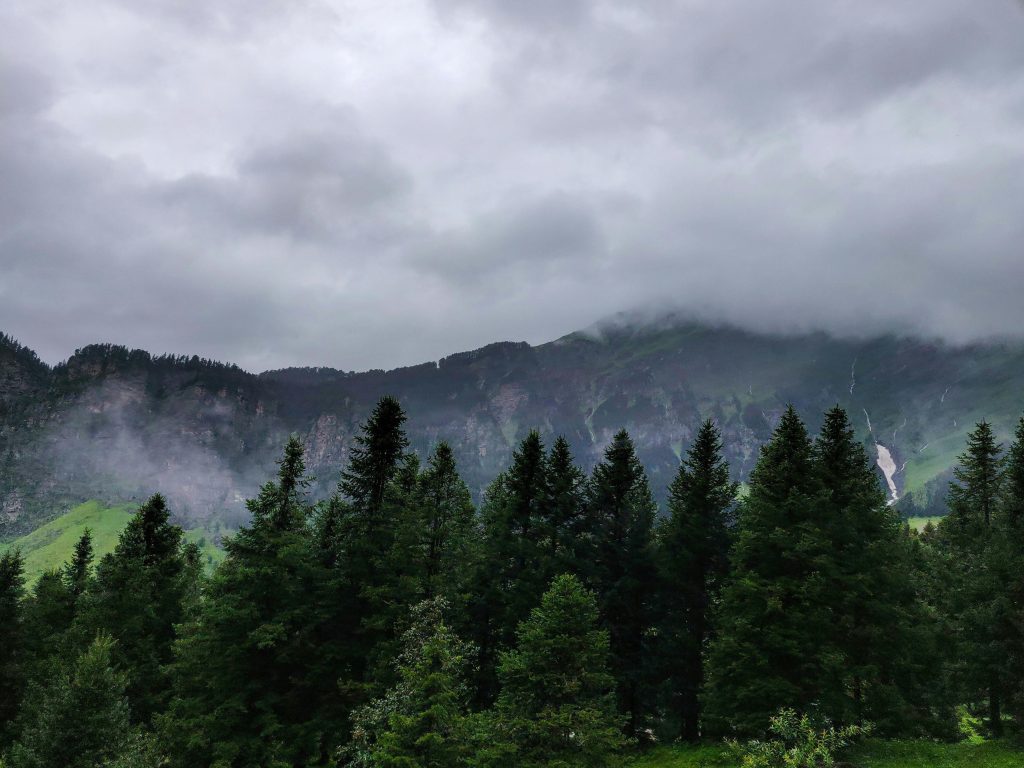
But July is also when Manali is, arguably, at its most visually dramatic. The entire Beas Valley turns a deep, saturated green. Waterfalls appear on every hillside — many of them not visible at any other time of year. The Beas River runs at its fastest and most powerful. The mountains are veiled in cloud and mist in a way that photographers find extraordinary.
For travellers who are comfortable with rain, flexible about their itinerary, and genuinely interested in seeing the Himalayas in their monsoon avatar — July is a fascinating and deeply atmospheric time to visit. Hotels are at their emptiest and most discounted. You often have the town almost entirely to yourself.
Best for: Budget travellers who want maximum value and minimal crowds. Photography enthusiasts drawn to the monsoon landscape. Travellers who have been to Manali before and want to see a completely different version of it.
Avoid if: You want specific activities like Rohtang Pass, trekking, or river rafting — these are largely unavailable in July.
August — Deep Monsoon, Waterfalls at Maximum
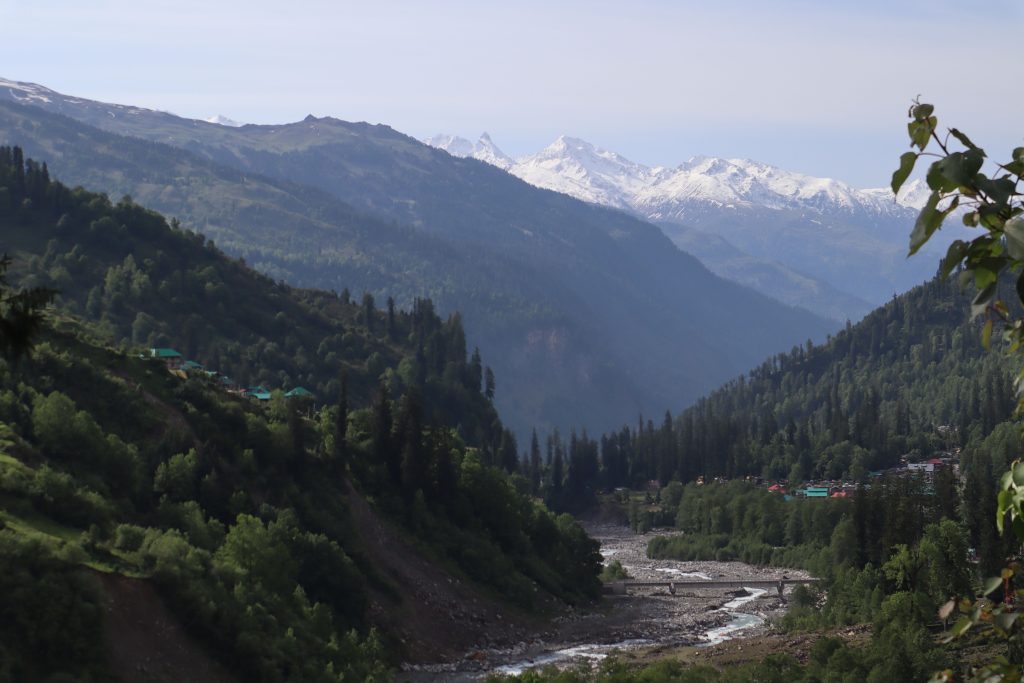
Temperature: 13°C to 21°C Crowd Level: Very Low Road Status: High landslide risk | Rohtang Pass closed most days | Travel requires caution
August is the deepest month of the monsoon in Manali. Rainfall is at its heaviest, landslides are most frequent, and mountain road conditions are the most unpredictable of the year. This is not the month for travellers who want control over their itinerary or who are visiting Manali for the first time.
However, August in Manali has a raw, powerful beauty that is unique. Waterfalls cascade down every valley wall. The Beas is thundering. The green is so intense it almost does not look real. The entire valley has a dramatic, cinematic quality that no other month replicates.
Hotel rates are at their absolute lowest in August. Flexible travellers, experienced in mountain conditions, and genuinely drawn to the atmosphere of the monsoon will find this a deeply rewarding month — as long as expectations are set correctly around road access and activity availability.
Best for: Experienced mountain travellers. Budget travellers are comfortable with rain and limited activities. Those who want solitude and the landscape entirely to themselves.
September — Monsoon Retreats, The Valley Exhales
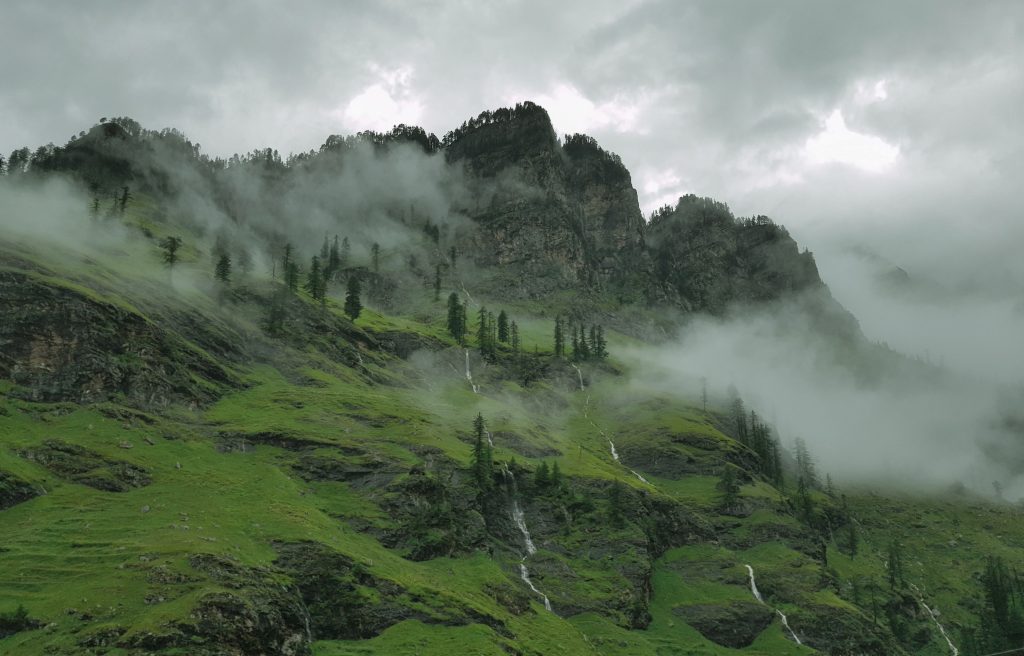
Temperature: 10°C to 20°C Crowd Level: Low to Moderate — beginning to pick up toward end of month Road Status: Rohtang Pass reopening | Roads clearing | Most routes accessible by late September
September is a transition month that rewards attentive travellers. The monsoon fades through September — heavy rain is concentrated in the first two weeks, and by the final week to ten days of the month, the weather is dramatically clearer. The landscape at this point is at peak green — all the monsoon’s colour and freshness, but with returning sunshine and clearing skies.
By late September, Rohtang Pass reopens after the monsoon closure, trekking trails reopen, and adventure activities begin running again. Hotel rates are still pre-peak, crowds are still thin, and the visual quality of the valley — brilliant green against clear blue post-monsoon sky — is outstanding.
Best for: Travellers who can time their arrival for the last ten days of September and catch the post-monsoon clarity at its freshest. Trekkers returning to Hamta Pass, Beas Kund, and Bhrigu Lake trails. Photographers wanting lush green landscape with clear mountain visibility.
October — The Most Underrated Month to Visit Manali
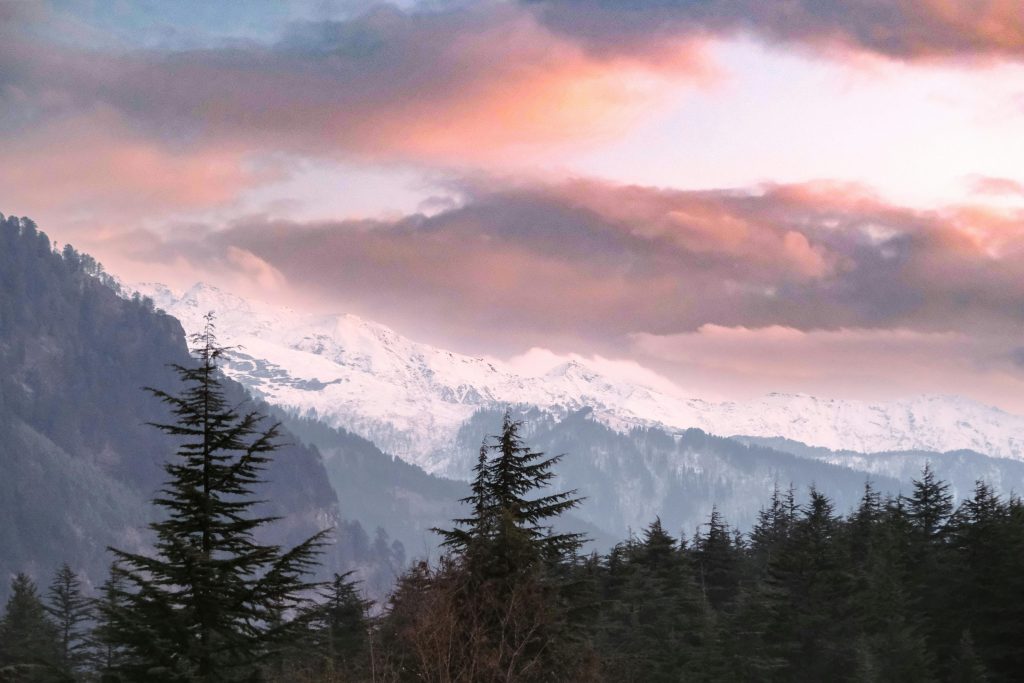
Temperature: 5°C to 18°C Crowd Level: Low — very few tourists Road Status: Rohtang Pass open (closes mid-November) | All major roads clear | Excellent conditions
If you ask experienced Manali travellers and mountain people when the best time to visit Manali is, a significant number of them will say October without hesitation.
Here is why. The monsoon has completely cleared. The sky is crystal blue — the kind of blue that only exists in the Himalayas after the rains have washed away every particle of dust and haze. The mountain peaks are fully visible, sharp and dramatic against the sky. The valley landscape is turning from monsoon green to autumn gold. The air is crisp and clean. The crowds are thin. The hotel rates are pre-peak. Rohtang Pass is still open, all trekking trails are accessible, and every adventure activity is running.
October is also when some of Manali’s most celebrated festivals take place, including Kullu Dussehra — one of the most spectacular Dussehra celebrations in India, held in the Kullu Valley with processions of local deities from hundreds of village temples across Himachal Pradesh. It is a cultural experience of genuine depth that the peak summer season crowds never encounter.
Best for: Photographers — the October sky and landscape are outstanding. Festival travellers who want to experience Kullu Dussehra. Trekkers who want the full range of trails without heat or rain. Travellers who want Manali at its most beautiful and least crowded simultaneously.
This is, in the opinion of many experienced mountain travellers, the single best time to visit Manali.
November — Winter Begins, Snow Returns to the Peaks
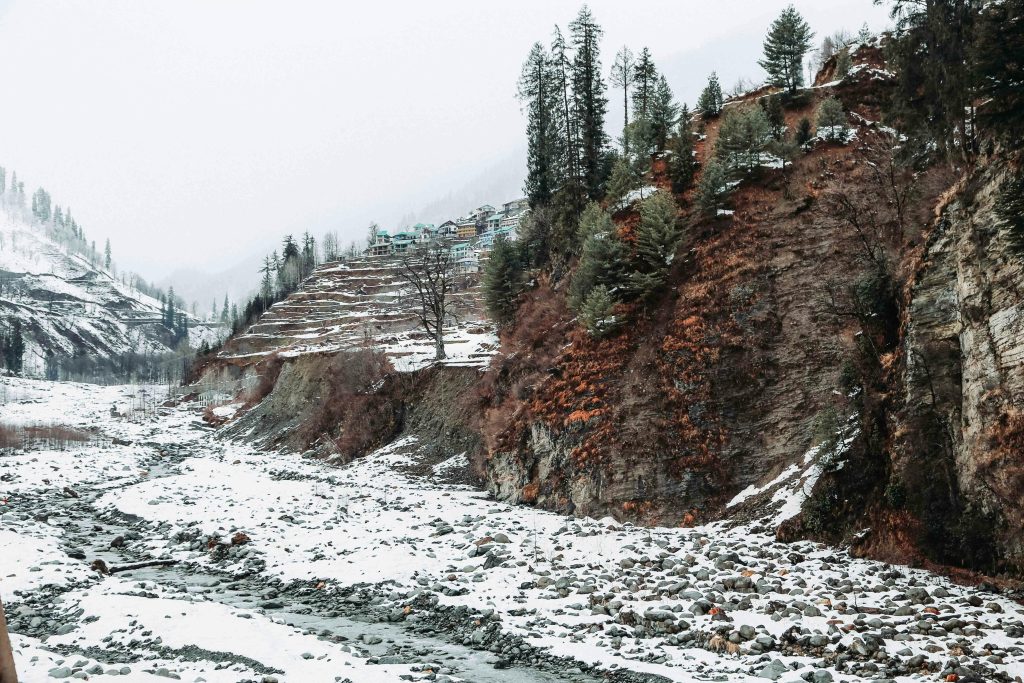
Temperature: 0°C to 12°C Crowd Level: Very Low Road Status: Rohtang Pass closes mid-November | Atal Tunnel remains operational | Town roads clear
November is the beginning of winter’s return to Manali. Rohtang Pass typically closes for winter around mid-November. The first significant snowfall of the season hits the higher peaks. Solang Valley begins to see snow by late November. Temperatures drop sharply, especially at night, and the character of Manali shifts toward its winter identity.
For travellers who want to catch Manali in a quiet, beautiful transitional state — the last golden autumn light giving way to first winter white — November is a short but distinctive window. Crowd levels are at their annual low, rates are excellent, and the first snowfall of the season carries a particular magic.
The town of Manali, Vashisht hot springs, Hadimba Temple, and the Kullu valley remain fully accessible and pleasant even as the higher reaches close down for winter.
Best for: Travellers who want Manali at its most peaceful and least commercial. Those chasing the first snowfall of the season at Solang Valley and the upper reaches. Budget travellers who want the Manali experience at the lowest possible cost.
December — Christmas in the Snow, Festive Manali
Temperature: -4°C to 8°C Crowd Level: Low — then very high for Christmas–New Year week Road Status: Rohtang Pass closed | Atal Tunnel operational | Solang Valley accessible
December has two distinct personalities in Manali. Early to mid-December is quiet, cold, and deeply peaceful — Solang Valley begins to fill with snow, the town is calm, and the entire Himachal landscape has a pristine, undisturbed beauty that is genuinely extraordinary. For travellers who want winter Manali without peak holiday crowds, early December is a perfect window.
Then Christmas week arrives and everything changes. The last week of December — from approximately December 23 through January 2 — is the single most festive and crowded period in Manali’s entire year. Cafes and restaurants in Old Manali are packed with young travellers, music fills the lanes, New Year celebrations on the mountainsides draw visitors from across India, and Solang Valley runs snow activities around the clock. Hotel rates hit their annual maximum, and booking even weeks in advance becomes insufficient.
Best for (early December): Quiet winter seekers wanting snow without crowds. Couples and honeymooners want a peaceful Manali winter experience. Best for (Christmas–New Year week): Young groups and travellers who want the festive, high-energy version of Manali. Those who want Solang Valley snow activities combined with a celebratory atmosphere.
Quick Reference: Best Time to Visit Manali by Traveller Type
| Traveller Type | Best Months | Why |
|---|---|---|
| Honeymoon couple | January, February, December | Snow, romance, quiet |
| Family with kids | May, June | Full activities, school holidays |
| Adventure & trekking | April, May, June, October | All trails + activities open |
| Snow lovers | January, February, December | Heavy snowfall, Solang Valley |
| Photography | October, September (late), March | Light, landscape, clarity |
| Budget traveller | February, October, November | Low rates, good conditions |
| Road trip (Leh–Manali) | June, July | Manali–Leh Highway open |
| Avoid crowds | October, November, February | Low tourist volume |
Month-Wise Temperature Quick Reference for Manali
| Month | Day Temp | Night Temp | Rain / Snow | Crowd |
|---|---|---|---|---|
| January | 5–10°C | -4°C | Heavy snow | Moderate |
| February | 8–12°C | -2°C | Snow | Low |
| March | 10–15°C | 2°C | Light snow | Low |
| April | 15–20°C | 5°C | Occasional | Moderate |
| May | 20–25°C | 10°C | Rare | Very High |
| June | 22–28°C | 13°C | Pre-monsoon | Very High |
| July | 18–22°C | 13°C | Heavy rain | Low |
| August | 17–21°C | 13°C | Heavy rain | Very Low |
| September | 15–20°C | 10°C | Fading rain | Low |
| October | 12–18°C | 5°C | Dry | Very Low |
| November | 5–12°C | 0°C | First snow | Very Low |
| December | 3–8°C | -4°C | Snow | Low–High |
What Is the Overall Best Time to Visit Manali?
The honest answer is that it depends on what you are looking for — but here is our verdict based on years of experience sending travellers to Manali:
For first-time visitors: May is the best time to visit Manali. Every attraction is accessible, the weather is excellent, and the full range of activities is running. The crowds are real but manageable with booking.
For those who want the best experience with fewer people: October is the best time to visit Manali, full stop. The sky is clearest, the landscape is most beautiful, the activities are all running, and the crowds are minimal. This is the insider’s choice.
For snow seekers: January and February are the best times to visit Manali for a dedicated snow trip. Deep powder at Solang Valley, skiing, and snowfall in the town itself.
For budget travellers, February and October offer the best combination of good conditions and affordable pricing across accommodation and packages.
For adventure travellers and trekkers, Late April through June, and again in October, gives you the best trekking and adventure conditions in Manali.
How to Book Your Manali Trip Through Travel Breed
Planning a Manali trip involves more than just picking dates. The right property, the right transport, the right activities for the right season, and having someone to call when the mountain weather shifts unexpectedly — these are the things that separate a good Manali trip from a great one.
Travel Breed has been crafting Manali packages for travellers from Delhi, NCR, and across India for years. We know which hotels perform well in each season, which operators run safe and reliable adventure activities, what Rohtang Pass permit formalities look like in real time, and how to build an itinerary that makes the most of whichever window you are travelling in.
Our Manali packages include accommodation, transport from Delhi or Chandigarh, sightseeing, adventure activities, and a dedicated point of contact throughout your trip.
WhatsApp MANALI to +91 9999 53 1212 and our team will send you customised Manali package options for your dates, group size, and budget within the hour.
Frequently Asked Questions — Best Time to Visit Manali
What is the best time to visit Manali overall? The best time to visit Manali for most travellers is either May (peak summer, all attractions open, excellent weather) or October (post-monsoon, crystal clear skies, minimal crowds, all activities running). May suits first-time visitors and families. October is the insider favourite for those who want the most beautiful version of Manali without the peak-season rush.
Which month is best to see snow in Manali? January and February are the best months to see snow in Manali town and at Solang Valley. December’s Christmas–New Year week also sees good snowfall at higher elevations. If you specifically want to play in fresh snow and do skiing or snowboarding at Solang Valley, January is the single best month.
Is Manali good to visit in summer? Yes — the best time to visit Manali is in May and June. The weather is pleasantly cool, Rohtang Pass opens in May, and all adventure activities are running. June adds the bonus of the Manali–Leh Highway opening for road trip travellers. Both months require booking as they represent peak season.
What is the best time to visit Manali for a honeymoon? For honeymoon couples who want snow, January and February are the best times to visit Manali — romantic, snow-covered, and quieter than the December peak. For couples who want pleasant weather and full activity options, May or October are the best times to visit Manali for a honeymoon.
Can I visit Manali in the monsoon? Manali can be visited during the monsoon (July–September), but it requires flexibility and realistic expectations. Rohtang Pass is frequently closed, adventure activities are largely suspended, and the risk on mountain roads is real. However, the landscape is extraordinarily beautiful, crowds are minimal, and hotel rates are at their lowest. Late September is the best monsoon-adjacent window — the rains are fading, and the green landscape is at its most vivid.
What is the best time to visit Manali from Delhi? The best time to visit Manali from Delhi is May through June for a first trip — the Delhi to Manali drive or Volvo overnight bus is most comfortable in this period, Rohtang Pass is accessible, and all attractions are at full operation. October is equally good for those who want fewer crowds. For a snow trip, January and February are ideal — the overnight Volvo from Delhi to Manali runs year-round.
How many days are enough for a Manali trip? A minimum of 3 nights and 4 days allows you to cover the key attractions — Solang Valley, Rohtang Pass or Atal Tunnel, Hadimba Temple, Old Manali, and Vashisht. For a more relaxed experience, including trekking or a Kullu extension, 5 nights and 6 days is the recommended duration. Travel Breed packages are available in both formats.
Is Manali safe to visit in winter? Manali town is safe and accessible throughout winter. Solang Valley remains accessible for snow activities. Rohtang Pass is closed for vehicular traffic in winter but the Atal Tunnel provides year-round access to the Lahaul valley. Travellers need to pack for severe cold and be aware of road conditions after fresh snowfall — snow chains are required for vehicles on certain routes. Travel Breed handles all logistics for winter Manali trips, including road-condition monitoring and appropriate vehicle arrangements.
Plan your Manali trip with Travel Breed — packages for every season, every budget, and every group size. WhatsApp MANALI to +91 9999 53 1212 or visit travelbreed.com.
Tags: Best Time to Visit Manali | Manali Month Wise Guide | Manali Weather 2026 | Manali in January | Manali in May | Manali in October | Manali Snow Season | Manali Summer Trip | Manali Honeymoon | Rohtang Pass Open Month | Solang Valley Best Time | Travel Breed Manali Packages | Manali Trip from Delhi